Celebrate charitable giving, inherited IRAs, client solutions, and philanthropic advising
Celebrate charitable giving and engage your clients
National Estate Planning Awareness Week
For many professional advisors, estate planning is part of your client conversations every single month, week, and day of the year. You never hesitate to remind clients to update their wills, trusts, and financial plans as circumstances change in their lives.
Even though you remind your clients regularly about the importance of having an updated estate plan, estate planning may still wind up at the bottom of many to-do lists. That’s why it is very helpful when clients are motivated by reminders from other sources that validate what you tell them on a regular basis. Such is the case with National Estate Planning Awareness Week, which falls between October 20 and 26 this year. It’s a great time to check in with clients not only related to the estate plan provisions for distributions to their heirs, but also the provisions in their estate plans to leave a gift to one or more charitable organizations.
The Community Foundation is here to help! Here are three suggested steps for making the most of National Estate Planning Awareness Week with your clients:
Use the OBBBA as an ice breaker
First, remind clients that the One Big Beautiful Bill Act has changed the landscape for charitable deductions, especially for your clients who have been in a gray area in recent years as to whether or not they itemize their deductions. For high income earners, 2025 presents opportunities to “front load” charitable deductions through a donor-advised fund at the Community Foundation before the floor and cap kick in next year.
Bridge the conversation to estate gifts
Second, while you are on the subject of charitable giving, remind your clients that now is a perfect time to check in on their plans to include gifts to nonprofits in their wills, trusts, or beneficiary designations. Clients will appreciate refamiliarizing themselves with the provisions they’ve already included. If a client has not yet arranged for a legacy gift to a nonprofit, and the client makes regular charitable gifts each year, evaluate whether it also makes sense to include an estate gift. Many clients who are very philanthropic during their lifetimes simply have not stopped to consider this idea and will welcome the discussion.
Call the Community Foundation
Third, lean on the professional staff at the Community Foundation to help your client create a portfolio of charitable giving strategies that align with both their philanthropic intentions and their estate and financial goals. As your client’s home for charitable giving, our team can customize and coordinate a suite of vehicles designed to achieve lasting impact — including:
- A donor-advised fund to organize giving and help navigate new opportunities arising from the One Big Beautiful Bill Act;
- A designated fund to receive Qualified Charitable Distributions for clients aged 70½ and older;
- Annual support for the Community Foundation’s initiatives; and
- Documentation of estate gift intentions, ensuring the client’s legacy benefits charitable causes they care about.
DAF Day 2025
There’s more to celebrate!
Attorneys, CPAs, and financial advisors who work with charitably-inclined clients should know about DAF Day 2025 on October 9 because it highlights the powerful role donor-advised funds (DAFs) play in philanthropy.
Take advantage of this national moment and timely opportunity to introduce your clients to the idea of establishing a donor-advised fund at the Community Foundation. Of course, donor-advised funds are known for helping your clients streamline giving, maximize charitable deductions, and align with estate and tax planning strategies.
What’s even better, though, is that when your clients establish a donor-advised fund at the Community Foundation, they are tapping into a well-respected, long-standing local resource that has its finger on the pulse of our community’s needs, and which charitable organizations are addressing them. Our professional staff is here to help you strengthen your client relationships and ensure that your clients’ philanthropy is both meaningful and strategically effective through not only donor-advised funds, but many other vehicles to achieve clients’ estate planning and their community impact goals.
We look forward to working with you and your clients in October … and in every single month of the year. Thank you for your partnership.

Inherited IRAs: A charitable solution?
Remember the good old days when your clients could withdraw the money they inherited from their parents’ IRAs over the course of their lifetimes, thereby deferring the income tax for as long as possible? This so-called “stretch IRA” was largely eliminated by the SECURE Act of 2019, requiring most non-spouse beneficiaries to withdraw the entire inherited IRA within 10 years, rather than stretching withdrawals over their lifetime.
For a very specific subset of your clients, however, there may be an alternative. Here is the ideal fact pattern:
- Your client owns an IRA.
- Your client is very philanthropic, and charitable organizations are prioritized in the client’s estate plan even where the client has children or other heirs.
- Your client has identified a young, healthy heir to whom the client would like to leave a legacy gift.
- This heir is likely to be in a high-income tax bracket in the years ahead and wants to defer income tax wherever possible.
The concept, oversimplified for illustration purposes, goes something like this:
- Instead of naming the heir directly as the beneficiary of the IRA, your client instead would name as beneficiary a charitable remainder unitrust, referred to as a CRT, or even a “NIMCRUT” (net-income make up charitable remainder unitrust), of which the heir is the income beneficiary.
- The CRT would receive the IRA proceeds upon your client’s death.
- The tax result of this structure somewhat mimics the old stretch IRA because, as a charitable entity, a CRT does not itself get hit with income tax on the income from the IRA.
- According to the terms of the CRT, the assets can be distributed annually over the heir’s lifetime (or for a fixed period of up to 20 years) and, similar to what would have happened with the old stretch IRA, the heir will pay income taxes on distributions from the trust as they are received.
So why doesn’t everyone do this? Here are three reasons:
- It’s actually possible for an heir to be too young for this technique to work well. The IRS requires that a CRT’s pay-out rate results in a present value of the future gift to charity of at least 10% of the value of the initial gift. This means that the pay-out rate could be too low to justify the expense and hassle of the transaction where the CRT’s income beneficiary is very young.
- There is always a risk that the heir will die prematurely, sending the entire remainder interest to the charity with nothing remaining to pass to the heir’s own heirs.
- Even when compared with the 10-year rule, it can take a very long time for the CRT’s tax benefits (i,e., more wealth) to outweigh the projected “loss” of the assets that will ultimately go to charity.
What’s the bottom line here? If your client is truly charitable, they may be better able to fulfill their charitable goals by naming a nonprofit organization, such as the client’s fund at GiveWell Community Foundation, as the beneficiary of the client’s IRA, leaving other assets eligible for the step-up in basis to fund the estate gifts for heirs.
As always, the professional staff at the Community Foundation is here to help! Please reach out anytime.

Three clients. Three solutions. One common theme.
Consider the following hypothetical client situations:
You want to help Emily Harper benefit from itemizing deductions.
Your client, Dr. Emily Harper, a 62-year-old physician, has long supported many local charities with annual donations totaling around $20,000. While generous, her giving has not exceeded the standard deduction under the current tax law, which means she has received little to no tax benefit for her contributions. You’ve counseled Emily that 2026 will bring even more limitations on her ability to deduct charitable contributions.
Working with the Community Foundation, you are arranging for Emily to contribute $100,000 of appreciated stock this December to establish a donor-advised fund. This large, single-year contribution will allow her to itemize deductions for 2025 and maximize her tax savings, while still preserving the flexibility to recommend grants of $20,000 per year to her favorite charities over the next five years. By front-loading her philanthropy, Emily not only secured a significant deduction even under the higher standard deduction thresholds in place, but she also avoided potential exposure to the upcoming IRS “ floor and cap” rules under the One Big Beautiful Bill Act.
You are worried about Jonathan Lee’s concentrated stock positions.
Jonathan Lee, a 58-year-old business executive, has accumulated a significant position in a favorite stock over the past two decades. As Jonathan’s advisor, you have grown increasingly concerned about the concentration risk in his portfolio and the steep capital gains tax bill he would face if he sold shares outright. You also discovered that Jonathan has consistently supported a handful of local nonprofit organizations with annual cash gifts. (This made you cringe; you wish Jonathan had consulted you about giving stock versus cash.)
Working with the Community Foundation, you arranged for Jonathan to donate $250,000 worth of his highly-appreciated stock to establish a donor-advised fund. This move accomplished two critical objectives: it allowed Jonathan to bypass the capital gains tax on the gifted shares and made him eligible for a full fair-market-value charitable deduction for the stock’s value on the date of the gift. Now, instead of writing annual checks from after-tax dollars, Jonathan can recommend grants from his donor-advised fund over time, maintaining his philanthropic giving pattern while enjoying significant tax efficiency. What’s more, by contributing stock instead of cash, Jonathan transformed a concentrated holding into diversified charitable capital.
Margaret Davis has more money in her IRAs than she’ll ever need.
Your client, Margaret Davis, is 74 years old. She continues to receive royalty income from several books she wrote over the course of her career as a successful novelist. Margaret also owns several IRAs. Her royalties are more than enough to cover her living expenses; she simply does not need the Required Minimum Distributions (RMDs) from her IRAs. You have counseled her, though, that she has to take those distributions under IRS rules.
Recently, Margaret sent you an article she read in the Wall Street Journal about Qualified Charitable Distributions, or QCDs. Truth be told, you’ve likely heard about QCDs, but you may not specialize in tax planning and you simply have not had the time to get up to speed on these vehicles. But, because Margaret brought it up, you wisely dive in.
You learn that Margaret, because she is over the age of 70 ½, can direct up to $108,000 (the 2025 limit) to qualified charitable organizations. You’ve reached out to the Community Foundation for help, and you are glad you did because the Community Foundation professional staff is setting up a designated fund to receive Margaret’s QCDs. The designated fund, in turn, will support a local nonprofit organization serving at-risk seniors, where Margaret has volunteered for decades, and can continue to provide funding even after Margaret passes away. What’s more, the QCD dollars are excluded from Margaret’s income and still satisfy a portion of her RMD. In addition, the QCD reduces Margaret’s exposure to Medicare Income-Related Monthly Adjustment Amount surcharges—benefits that would not have accrued if she’d simply donated from after-tax cash.
If your client base includes people like Emily, Jonathan, and Margaret, please give us a call! The Community Foundation is here to help service your clients. The tax benefits are terrific, but that’s not always what is most important. What’s most important is that you are helping your clients fulfill their charitable objectives, making our community and the lives of the people who live here even better for generations to come.

Philanthropic advising? Yes, we do that!
Recently, a few professional advisors have shared with us that affluent clients have begun to ask for guidance far beyond traditional estate, tax, and investment matters.
For example, clients are asking their advisors:
- “Is there someone who can help us figure out whether our charitable giving is really making a difference?”
- “If we want our kids to make their own money, that means we have to find an alternate landing place for the bulk of our wealth. Where do we even begin?”
- “Now that we’re retired and have more time to spend in the community, what should we do? Should we join boards of directors? Get more involved in the organizations we support through volunteering? Put more strings on our large charitable gifts?”
If your clients are asking questions like this, please give us a call. The Community Foundation can help. Indeed, even in an era when a new type of professional–the standalone philanthropic advisor–is emerging, these subjects are nothing new at the Community Foundation.
Here are a few of the ways we shine:
- Our professional staff is well-equipped to help your clients structure their philanthropy, design roles for the next generation, develop a grantmaking plan, measure impact, and evaluate various avenues for how your clients can invest their time and talent, as well as their wealth, to create impactful change in the community.
- As the original “philanthropic advisors,” community foundations offer deep insight into regional needs, vetted nonprofit networks, flexible giving structures, and coaching that complements your legal, tax, and financial planning advice.
- Because GiveWell Community Foundation operates day in and day out at the intersection of donors, nonprofits, and civic infrastructure, we understand where impact can be achieved—and where it can’t—better than most external consultants.
- Our staff members know local nonprofits’ strengths, growth trajectories, operational challenges, and, importantly, the people at these nonprofit organizations.
- The Community Foundation’s professional staff has years of experience helping donors design effective grants, measure outcomes, and convene collaborations.
- Our staff can help establish a structure to achieve your clients’ philanthropic goals while also working with you to align clients’ tax and estate planning goals with that structure. Vehicles include donor-advised funds, field-of-interest funds, designated funds, endowed funds, charitable remainder trusts, estate gifts, unrestricted gifts, or a combination of several options.
Please reach out anytime! Our professional staff is here to help your clients support their favorite charitable causes and make a positive impact in our community and beyond. We are committed to serving as your partner on all aspects of your clients’ charitable giving.

The professional staff at GiveWell Community Foundation is a resource and sounding board as you serve your philanthropic clients. We understand the charitable side of the equation and are happy to serve as a secondary and trusted source as you manage the primary relationship with your clients. This newsletter is provided for informational purposes only. It is not intended as legal, accounting, or financial planning advice.
Ready to get started?
You know your clients. We know philanthropy. Together we can ensure your clients make the best decisions for making a difference in the community.
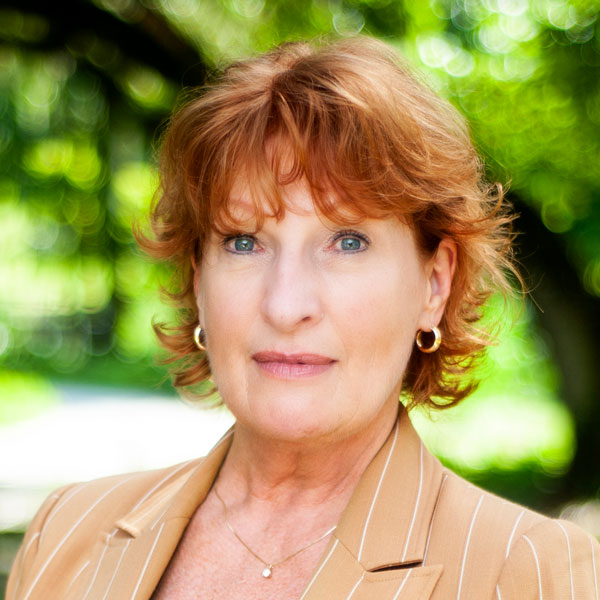
Lori Martini
Vice President/CPO
863-683-3131
lmartini@givecf.org